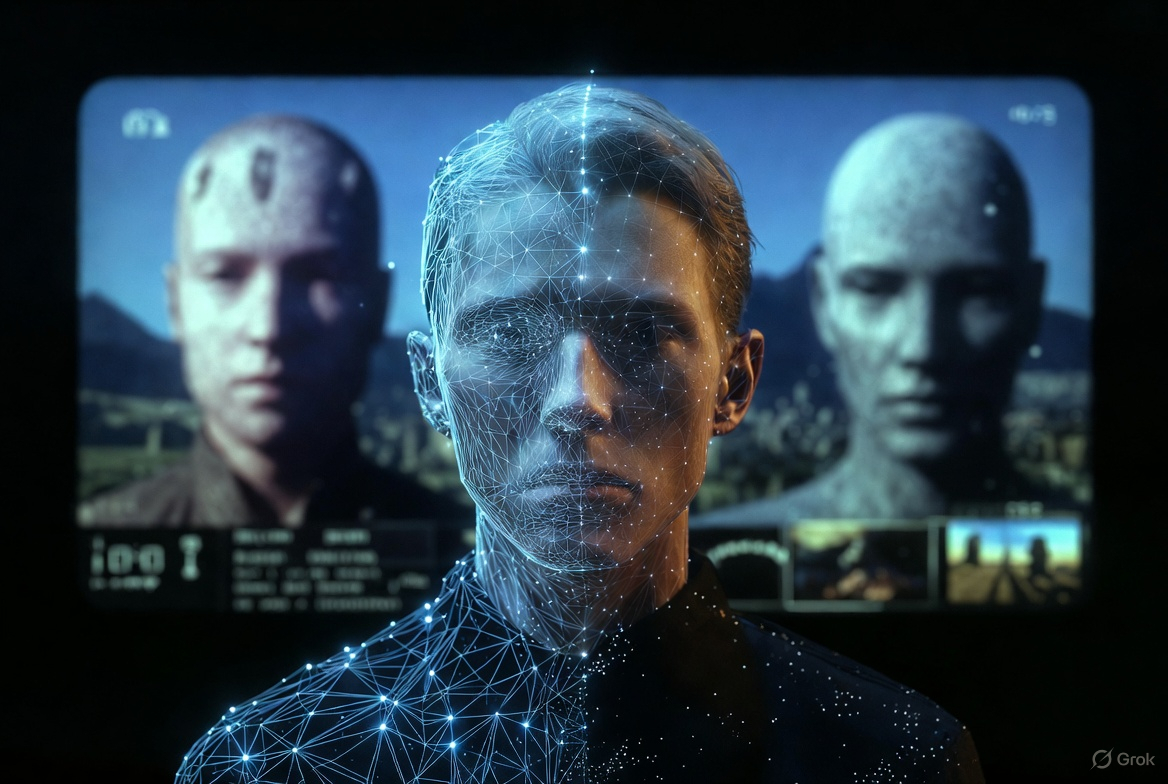
In early 2026, a 15-second clip appeared on social media that changed the way we think about reality. It wasn’t a trailer for a summer blockbuster, nor was it a leaked scene from a high-budget sequel. It was a rain-soaked, neon-lit alleyway brawl between Tom Cruise and Brad Pitt. The camera swooped with the kinetic energy of a seasoned action director. The lighting shimmered off leather jackets with ray-traced precision. The sound of punches landing had a visceral, heavy weight.
But the most shocking part? None of it was real.
It wasn’t filmed on a set. It wasn’t even “rendered” in the traditional sense. It was typed.
The clip was the debut of Seedance 2.0, a generative AI video model from ByteDance—the Chinese tech giant behind TikTok and CapCut. Within seventy-two hours, the “Cruise-Pitt Brawl” had racked up hundreds of millions of views, sending shockwaves through Hollywood boardrooms, union headquarters, and government offices in Washington and Beijing.
This isn’t just another tech update. This is the moment the “uncanny valley” was finally bridged, and the implications for the future of entertainment, law, and international power are staggering. Here is everything you need to know about Seedance 2.0, the “AI video app that shook the world.”
What Exactly is Seedance 2.0?
To understand why everyone is panicking, we first have to understand what Seedance 2.0 actually is. At its core, it’s a “multimodal” generative AI. While earlier models like OpenAI’s Sora or Google’s Veo impressed us with silent visuals, Seedance 2.0 is a “Digital Director and VFX Studio” rolled into one.
The Unified Multimodal Architecture
Most AI video tools are “Frankenstein” models. They generate a silent video, then use a second AI to generate audio, and perhaps a third to sync the two. Seedance 2.0 uses a unified brain. It processes text, images, and audio simultaneously to output a coherent scene.
When you prompt it for a “glass bottle shattering on a marble floor,” the AI doesn’t just draw the shards; it understands the physics of the impact and generates the corresponding sound effect at the exact millisecond of contact. This “joint audio-video” approach is why the clips feel so disturbingly real—the sensory input is perfectly aligned.
The Power of “9-3-3”
Inside the technical community, Seedance is famous for its 9-3-3 capability. This refers to the amount of “reference material” the model can digest at once:
- 9 Images: You can feed it nine different angles of a person’s face or an environment to ensure consistency.
- 3 Video Clips: You can give it “style” or “movement” references (e.g., a specific parkour jump).
- 3 Audio Clips: You can give it a specific voice or ambient soundtrack to mimic.
This isn’t just “prompting”; it’s directing. It allows a creator to maintain “character consistency”—the holy grail of AI video—ensuring that a character looks the same in Shot A as they do in Shot Z.
Why the Internet is Obsessed: The Viral Clips
If you’ve spent any time on TikTok or X (formerly Twitter) lately, you’ve likely seen the fruits of Seedance 2.0. The “Cruise-Pitt” fight was just the tip of the iceberg.
1. The Hollywood Deepfakes
Because ByteDance didn’t initially implement strict filters on celebrity likenesses, the app became a playground for unauthorized fan films. We’ve seen:
- Spider-Man and Darth Vader in a lightsaber duel on the streets of Tokyo.
- The “Friends” cast reimagined as hyper-realistic otters in a nature documentary.
- Will Smith battling a giant spaghetti monster—a meta-callback to the early, glitchy days of AI video that became a viral benchmark for Seedance’s realism.
2. High-Octane Action
What separates Seedance from its predecessors is its mastery of physics. In the past, AI characters would “float” or melt into the background. Seedance 2.0 understands weight and momentum. When a character in a Seedance clip lands a jump, their knees buckle correctly, their clothes sway with inertia, and the dust kicks up exactly where it should.
3. The “Micro-Drama” Explosion
In China, where Seedance 2.0 is integrated into the Jianying app (the Chinese version of CapCut), creators are using it to produce entire “micro-dramas.” These are short, vertical-format series that are massive on Douyin. Previously, these required a small crew and a few days of shooting. Now, a single creator can “generate” a high-production-value episode for about $45, according to industry analysts.
Hollywood’s Counter-Attack: The Legal War Begins
Hollywood didn’t just watch these videos and move on. Within days, the legal machinery of the world’s biggest studios began to grind.
Disney and Paramount Strike Back
The “House of Mouse” was the first to draw blood. Disney sent a blistering cease-and-desist letter to ByteDance, accusing them of a “virtual smash-and-grab” of their intellectual property. The claim is simple: to make a model that can generate a perfect Spider-Man or Grogu (Baby Yoda), the model must have been “trained” on Disney’s copyrighted films without permission.
Paramount followed suit, listing a “who’s who” of threatened franchises, including Star Trek, South Park, SpongeBob SquarePants, and Teenage Mutant Ninja Turtles.
The Motion Picture Association (MPA) Weighs In
The MPA, which represents Disney, Netflix, Warner Bros., and others, issued a statement framing Seedance 2.0 as an existential threat to the American creative economy. They argue that ByteDance is “engaging in unauthorized use of U.S. copyrighted works on a massive scale” and doing so “without meaningful safeguards.”
The Union Crisis: SAG-AFTRA
For actors, this is a nightmare realized. SAG-AFTRA (the Screen Actors Guild) has condemned the “unauthorized use of members’ voices and likenesses.” If an AI can create a “new” Tom Cruise performance that is indistinguishable from the real thing, the very concept of an actor’s “identity” becomes a commodity that can be stolen and replicated for free.
The Human Artistry Campaign, a coalition of creators, called the launch “an attack on every creator around the world,” stating bluntly: “Stealing isn’t innovation.”
The ByteDance Response: Walking the Tightrope
ByteDance finds itself in a precarious position. On one hand, Seedance 2.0 is a crowning achievement that proves they are at the forefront of the AI race. On the other, they risk being sued into oblivion or banned in Western markets.
In response to the backlash, ByteDance has promised to:
- Strengthen Safeguards: They are rolling back features that allow users to clone voices from a single photo.
- Add Verification: New requirements will force users to prove they have the right to use a specific likeness.
- Watermarking: Implementing “invisible” watermarks to help platforms identify AI-generated content.
However, critics point out that ByteDance has not disclosed its training data. Until they prove they didn’t “scrape” Hollywood’s library to build the model, the legal battles are unlikely to end.
The Geopolitical Lens: The China-US AI Rivalry
Seedance 2.0 isn’t just about movies; it’s about power. In 2017, China’s State Council released a roadmap to become the global leader in AI by 2030. Seedance 2.0 is a loud, viral signal that they are on schedule.
The “Cheap AI” Strategy
There is a fascinating economic angle here. While US models like Sora are often kept behind closed doors or offered at high price points to enterprise clients, China is betting on mass accessibility.
Seedance 2.0 is relatively cheap to use. By flooding the market with inexpensive, “good enough” AI tools, China aims to make their platforms (like CapCut) the default infrastructure for the next generation of creators worldwide. If a teenager in Brazil or a small marketing firm in France wants to make a video, they won’t use an expensive US tool—they’ll use the Chinese one.
The Talent War
The rivalry is also personal. ByteDance has been aggressively hiring AI talent in Silicon Valley hubs like San Jose and Seattle. The “brain drain” from Western labs to Chinese firms is a major concern for US policymakers, who fear that the next great technological breakthrough will be exported back to Beijing.
What Does This Mean for the Future of Truth?
Beyond the legal and economic drama lies a much deeper, more unsettling question: Can we ever trust our eyes again?
For over a century, “seeing is believing.” Video was the ultimate evidence. If there was a recording of it, it happened. Seedance 2.0 has effectively ended that era.
The End of Video as Evidence
AI researchers warn that we are entering a period where “plausible fakes” will be indistinguishable from reality. This has massive implications for:
- Politics: Imagine a perfectly rendered “leak” of a candidate saying something inflammatory.
- Justice: Can video evidence be admitted in court if a $50 app can generate it?
- Personal Safety: The rise of non-consensual deepfakes and revenge porn is already a crisis; Seedance makes the tools to create them more powerful and easier to use.
Is This a “Turning Point” or Just Hype?
So, is Seedance 2.0 the “end of cinema” or just a fancy new filter? The truth lies somewhere in the middle.
Why it is a Turning Point:
- The Quality Floor has Raised: We have officially moved past “impressive for AI” to “straight-up impressive.”
- Democratization: A solo creator with no budget can now “storyboard” a film with cinematic quality. This will lead to a surge in creativity from people who previously couldn’t afford a camera crew.
- Workflow Integration: For professional VFX houses, tools like this won’t replace them, but they will become part of the pipeline, handling pre-visualization and background elements.
Why it’s not the End:
- Length Constraints: Seedance is still focused on short clips. Chaining them into a coherent 90-minute narrative with emotional resonance and plot logic is still a human-led task.
- The Legal Wall: The current “Wild West” of AI IP will eventually be tamed by regulation. We will likely see a future where AI models are trained only on “licensed” data.
- The Soul Factor: While AI can mimic the style of a director, it cannot (yet) innovate. It can only remix what has already been done.
How to Navigate the Seedance Era
Whether you are a creator, a business owner, or a casual consumer of media, you need a strategy for this new world.
For Creators: Embrace or Evolve
If your job is purely technical (simple editing, basic motion graphics), you are at risk. However, if you are a storyteller, Seedance is a superpower. Use it to prototype your ideas, create concept art, and speed up your workflow. The goal is to be the “Director” of the AI, not its victim.
For Businesses: IP is Your Fortress
If you own original characters or content, now is the time to double down on your IP protections. Conversely, don’t use AI-generated content of celebrities or copyrighted characters for your brand—the legal liability is currently a minefield.
For Everyone: Develop “Digital Literacy”
We must all become more skeptical. If a video seems too good (or too shocking) to be true, check the source. Look for the “tells”—glitches in the reflections, unnatural movements in the background, or a lack of metadata.
Conclusion: The Seedance 2.0 Global Impact
Seedance 2.0 is more than just an app; it’s a mirror. It reflects our incredible technological progress, our messy legal systems, and our deep-seated fears about the future of human creativity.
We are currently in the “silent film” era of AI video—the rough, exciting, and slightly chaotic beginning of something massive. As the dust settles from the Cruise-Pitt brawl, one thing is certain: the line between the “typed” and the “filmed” has blurred forever.
Hollywood may be shaking, but the cameras are still rolling—they’re just being operated by code instead of crews. The question is: who will be the ones writing the prompts?
Key Takeaways
- Seedance 2.0 is ByteDance’s new “unified” AI video/audio model.
- Physics and Character Consistency are its two biggest breakthroughs.
- Hollywood Studios are suing over “unauthorized training” and IP theft.
- China is using the tool to gain a strategic edge in the global AI market.
- Digital Truth is officially under threat as video becomes easily faked.
What’s your take? Is Seedance 2.0 a creative revolution or a digital disaster? Join the conversation in the comments below.